Published: April 27, 2026
Last Updated: April 27, 2026
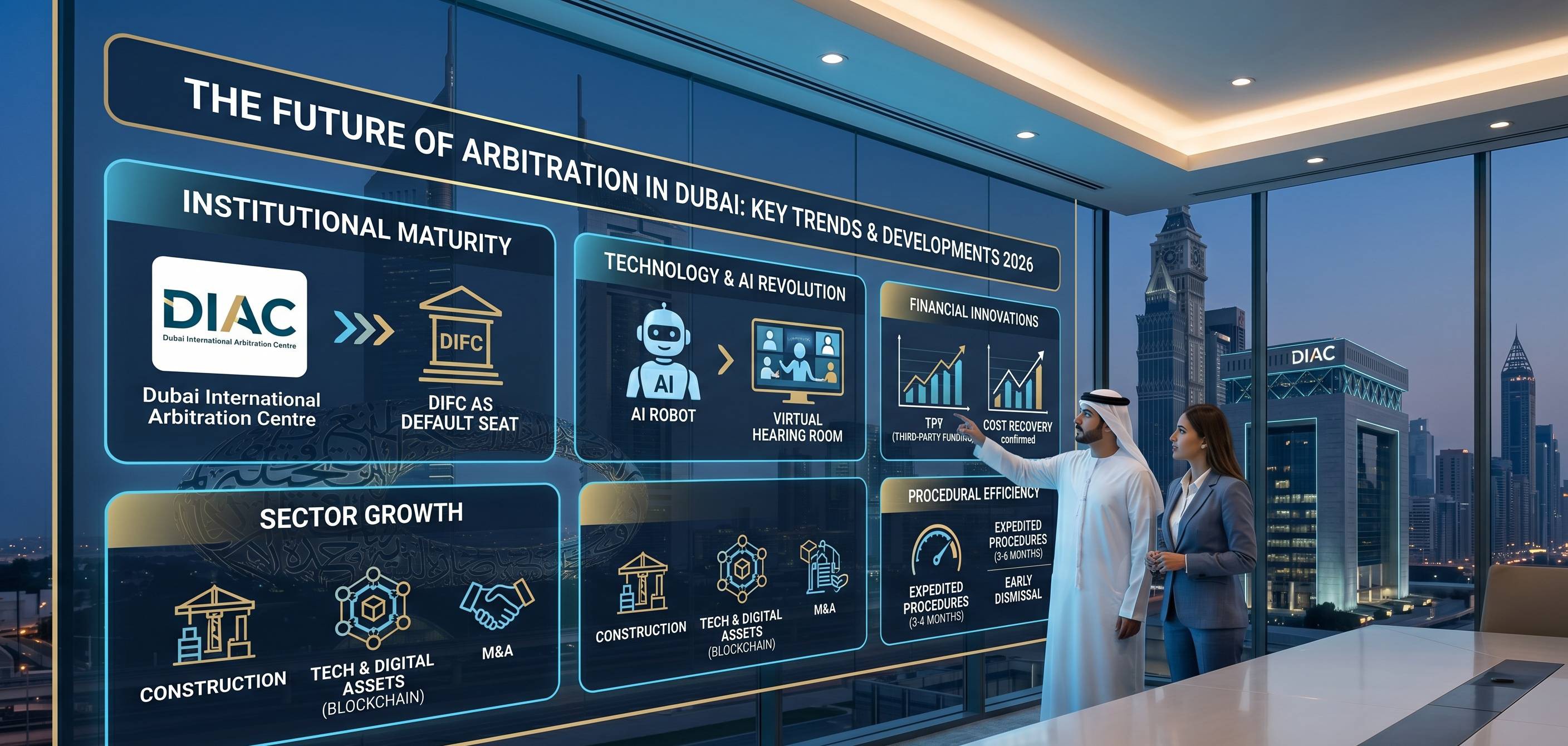
Dubai has established itself as a global leader in arbitration, offering companies a swift and well-established means to resolve disputes. The future of arbitration in Dubai is expected to change dramatically due to ongoing law reforms, the growth of arbitration centres, and the use of cutting-edge technology. Businesses and legal professionals alike must keep up with new trends and advancements, as arbitration is becoming increasingly popular over litigation.
Significant advancements have been made in Dubai's arbitration environment, especially since Federal Law No. 6 of 2018 on Arbitration (UAE Arbitration Law) went into effect. This law supports Dubai's standing as a desirable arbitration location by being in line with global best practices. The Dubai International Arbitration Centre (DIAC) has also been restructured to improve procedures' efficiency and transparency of procedures, strengthening its ability to handle complicated cases.
The acceptance and enforcement of international arbitral rulings is another noteworthy trend. Dubai is a desirable location for international arbitration since the United Arab Emirates, a signatory to the New York Convention on the Recognition and Enforcement of Foreign Arbitral Awards, keeps streamlining the enforcement procedure.
1. Increased Digitalisation and AI Integration
Arbitration proceedings are changing as a result of technological adoption; electronic filings, virtual hearings, and AI-driven legal research are all becoming increasingly prevalent. These days, digital tools make case management easier, cutting down on delays and increasing productivity.
2. Growth of Industry-Specific Arbitration
Arbitration is being used more and more to settle disputes in industries like energy, real estate, finance, and construction. Dubai's arbitration institutions are creating specialist panels to resolve conflicts unique to a given industry, guaranteeing that cases are handled by arbitrators with the necessary experience.
3. Enhanced Institutional Arbitration Rules
Dubai's arbitration centres, such as DIAC and DIFC-LCIA, are always revising their regulations to increase procedural flexibility, cut expenses, and speed up case resolutions. Businesses looking for alternative conflict resolution procedures will find arbitration even more alluring as a result of these enhancements.
4. Expansion of Third-Party Funding
In Dubai, third-party funding in arbitration is becoming more popular, enabling companies to pursue claims without having to shoulder the entire cost. For startups and SMEs embroiled in business disputes, this tendency is especially advantageous.
5. Strengthened UAE Court Support for Arbitration
By limiting judicial interference and guaranteeing the enforcement of arbitration agreements, UAE courts have strengthened their support for arbitration. Clear precedents favouring arbitration have been established by the Dubai Court of Cassation, guaranteeing procedure predictability and confidence.
Businesses must seek advice from skilled arbitration attorneys in Dubai to handle the intricacies of dispute resolution, as arbitration is developing quickly. Effective corporate protection is ensured by qualified legal experts who help form arbitration agreements, represent clients in hearings, and enforce arbitral rulings.
The future of arbitration in Dubai is marked by innovation, efficiency, and global recognition. As legal reforms continue to enhance arbitration proceedings, businesses will benefit from a more streamlined and reliable dispute resolution system. Engaging arbitration lawyers in Dubai remains crucial for companies looking to resolve disputes effectively while leveraging Dubai’s evolving arbitration landscape.